
About Us
About Humane Communities
Why Children and Animals Together
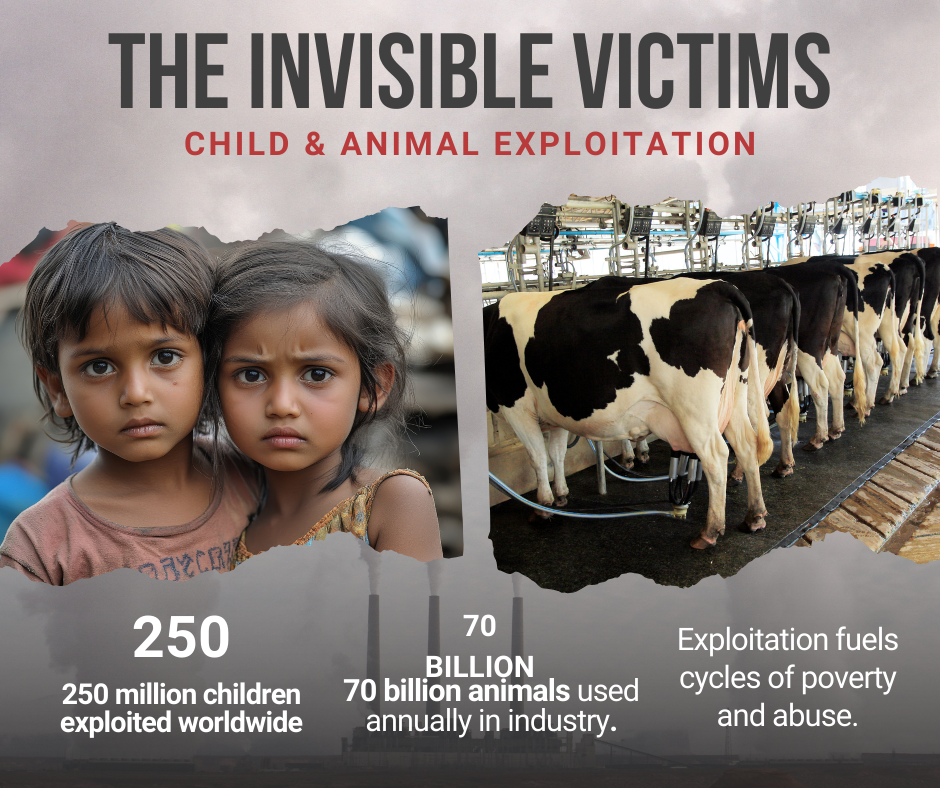
Harm does not exist in isolation. Research and lived experience show that communities with high rates of violence or neglect toward animals often face increased risks for children as well. These harms are connected through shared social, economic, and policy choices.
When systems tolerate exploitation, neglect, or cruelty—whether toward children or animals—it reflects a deeper failure to protect those with the least power.
Humane communities recognize this connection and respond at the root. They invest in prevention, strengthen families, and create environments where care is the norm rather than the exception.
The Problem
Exploitation Isn’t Always Obvious
Some forms of exploitation are clear, such as child abuse, trafficking, neglect, or animal cruelty. But many harms are built quietly into the systems that shape daily life.
When policies prioritize short-term economic growth over long-term community wellbeing:
Children are treated as consumers rather than future citizens
Families lack the support they need to stay stable
Animals are viewed as resources instead of living beings
Those with the greatest needs are left behind
These choices carry long-term costs—higher rates of violence, poor health outcomes, and fractured communities.
Why It Matters
Protection Is Practical
Protecting children and animals is not just a moral issue—it is a practical one. Communities that invest in early support, prevention, and accountability:
Experience lower rates of violence
Reduce long-term public costs
Strengthen family stability
Build trust and resilience
When harm is allowed to persist, communities pay for it later—in crisis response, healthcare costs, and lost human potential.
Prevention is more effective, more affordable, and more humane than repair.
Humane Solutions
What Humane Communities Do Differently
Humane communities design systems that protect first.
They:
Invest in families, caregivers, and early childhood support
Strengthen protections for children and animals
Address violence and neglect at their roots
Align policy with long-term wellbeing, not short-term profit
Treat care as essential community infrastructure
These approaches don’t just reduce harm—they create safer, healthier environments for everyone.
Take Action
Be Part of a Humane Future
Building humane communities requires shared responsibility. You can help by:
Learning how policy choices affect vulnerable populations
Supporting prevention-based programs
Advocating for humane, evidence-informed solutions
Partnering with organizations working at the community level
Sharing the message that protection matters
A safer world for children is inseparable from a safer world for animals—and both depend on the choices we make today.
Founding Organization: Fair Start Movement
Fair Start Movement is a 501(c)3 nonprofit organization dedicated to reforming family planning by replacing growth-centered family planning models with the human rights-based and child-first Fair Start model.